


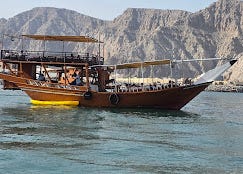
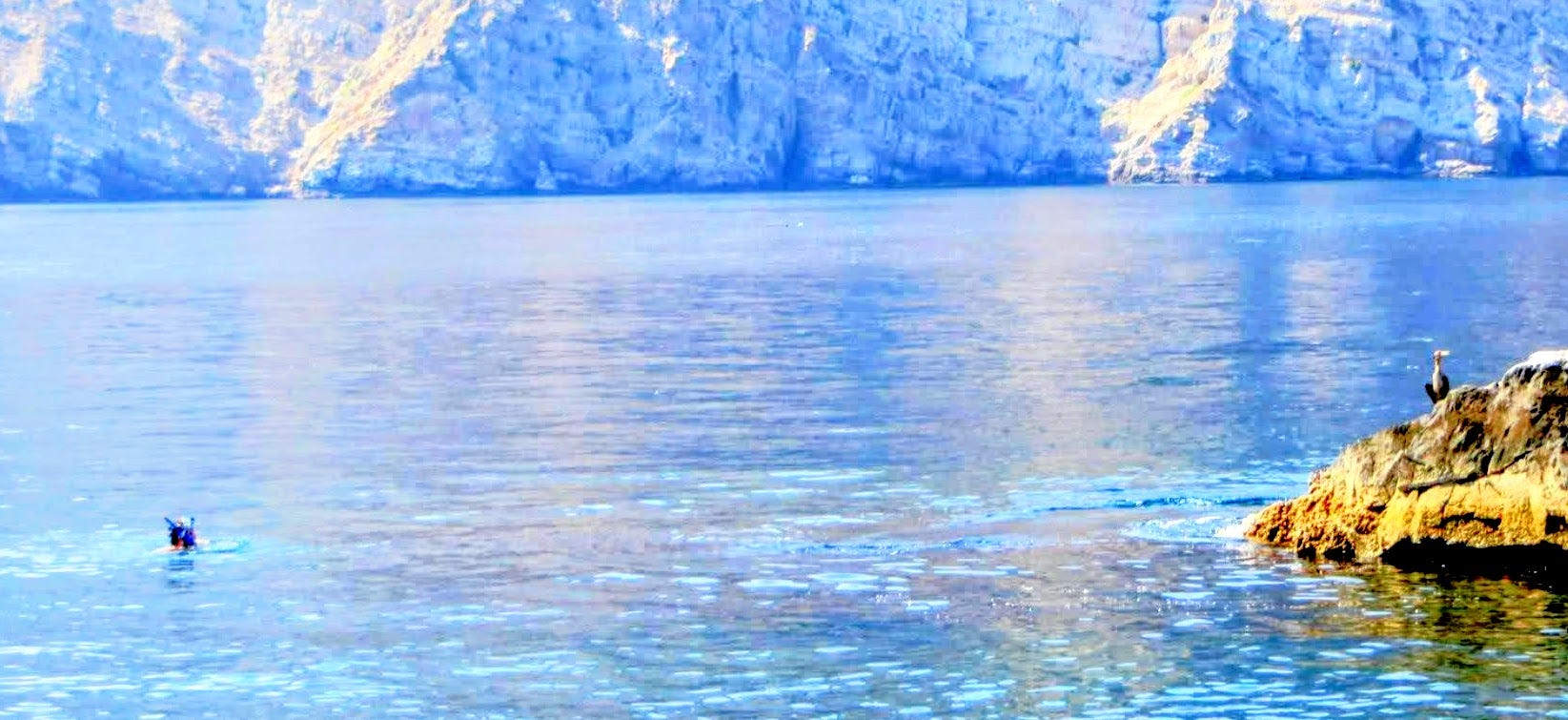
It's disconcerting to see war headlines about a place my wife and I, along with other UAE residents, considered a weekend getaway. Through the Dubai Natural History Group, we rented a dhow, sailed, swam, fished, snorkeled, picnicked, slept, and explored remote villages and islands in the Persian Gulf, Arabian Sea, and Strait of Hormuz (latest news). It was idyllic, the very definition of a relaxing, peaceful mini-vacation. Now it’s the focal point of war, conceivably even world war.


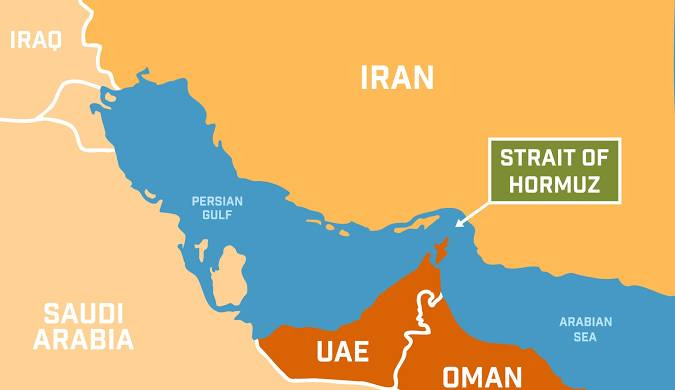
The 20-mile Strait, through which 20 percent of the world's oil passes, has allegedly been mostly closed, or mined, by Iran, in retaliation for U.S. and Israeli bombs. Iran’s regime intends to impose painful consequences for the attacks, to deter future aggression. Global oil prices are skyrocketing. This was all predicted, and Donald Trump was warned, according to intelligence sources. He threatened to send troops to seize Iran's Kharg Island, to try to reopen the Strait, then hours later said that’s the responsibility of the nations that most need the oil.
The Strait straddles the coasts of the UAE and my favorite Arab country, the peaceful Sultanate of Oman.
Sure, it’s just a few dozen miles from Iran, but the Omanis got along well with their Iranian neighbors. The Emiratis, who are Sunni Muslim Arabs, had a live-and-let-live attitude toward the Shia Muslim Persians of Iran, despite historic differences. Several Emirati tribes trace their lineage to Southern Iran.
Three of my Emirati male students who were fishing and sailing in the Strait more than a decade ago said they drifted into Iranian waters, were captured, and detained overnight. “It was very scary,” one reported to the class. But they weren’t badly treated and were released within a day.
In 2011, shortly after I arrived in the UAE, a 34-year-old Iranian, Mohammad Kobadi, swam across the Strait, averaging 7.2 miles per day. He actually swam the length of the entire Persian Gulf, or 653 miles over 84 days, from December 2011 to March 12, 2012. He is featured in the Guinness Book of World Records.
Global citizenship under attack
I thought of the Arabian Gulf states, along with Hong Kong, Singapore, London, New York, and Tokyo, as flagships of the movement toward globalization. People move around the world to pursue opportunities unavailable at home and gain international perspectives. It worked for my family. We rose several rungs on the economic ladder.
Now I wonder if the trend is slowing down, if not coming to a halt. In 2025, 20 percent fewer international students traveled to the U.S. than in 2024, and foreign tourist arrivals declined sharply. The U.S. lost an estimated $12 billion in foreign tourism revenue in 2025, due in part to rising tariffs, visa delays, Trump’s travel bans or restrictions for 19 countries, threats to deport international students for speaking freely, especially in favor of Palestinians, and more stringent vetting of student visa applications, reviewing their social media profiles and online statements, according to the NYT.
On the other hand, American students’ interest in studying abroad is still high. U.S. college students traveling abroad increased by six percent from 2022-23 to 2023-24, or nearly 300,000. “We are seeing off-the-charts demand for study abroad,” Melissa Torres, the president and CEO of the Forum on Education Abroad, a nonprofit that sets standards for the study abroad industry, told Business Insider.
Fewer grants and loans are available during the Trump administration, and more students complain they can’t afford to study abroad. Plus, American students are more likely to encounter skeptics of this administration’s policies abroad, according to the Business Insider analysis.
Gulf States, particularly the UAE, are likely to fall into recession due to the war with Iran
The Iranian missiles and drones hitting the Gulf States have greatly disturbed what the region, especially Dubai, sells the world: peace, safety, security, a haven for money and tourism in the Middle East. Even if the Strait of Hormuz is no longer blocked or mined, even if global oil starts flowing freely and the Iranian war ends soon, it will take some time, perhaps years, to reassure the world that Iran is stable and the Gulf states are safe.
More likely, the region is headed for recession in tourism, expats, and economic growth until then. The trust the Gulf states placed in Israel and the United States — Benjamin Netanyahu and Donald Trump — beginning with the Abraham Accords — may now seem misplaced.
Drill Deeper:
This Is How the Iran War Goes Global, by Niall Ferguson in the Free Press.
Could This Be the End of Dubai? It’s not built for war (NYT)
The Unraveling of Dubai As A Safe Haven (The New Yorker).
Sucked Into War, Gulf Countries Face the Limits of U.S. Security Guarantees (NYT). The Gulf’s authoritarian leaders, close American allies, have long questioned the value of their American security guarantees. Now, they are in the crosshairs of a regional war that their ally, the United States, started. And complaints about the limited value of American protection are growing louder…They worried that successful regime change in Iran was not feasible and that a failed state in Iran would become a disaster for them…Iranians have killed at least 15 civilians around the Gulf, mostly migrant workers.
Influencers sold the world a fantasy Dubai – and now it’s gone in a puff of missile smoke (UK Guardian)
If You Hate Dubai. It has welcomed residents from practically everywhere on Earth, and its openness stands in defiant contrast with Iran. (By Graeme Wood in The Atlantic)
Snorkeling in the Strait of Hormuz: With Iran threatening to attack, points of entry to the strait are ready to turn into sprawling maritime parking lots, filled with idle ships waiting for their escorts. (By Graeme Wood in The Atlantic)
Oman, My Favorite Arab Country

I think my favorite Arab country is Oman, located at the Eastern tip of the Arabian peninsula. It can’t boast the excessive oil wealth of its neighbors or spectacular monuments. It doesn’t have Abu Dhabi’s Grand Mosque or Louvre, Dubai’s Burj Khalifa
It must have been fascinating to immerse yourself in such an entirely different culture. Also, it seemed, from 9000 miles away, to be a totally new and lavishly designed culture that emerged out of the heat and sand, only because there was oil under that sand. Did they have any real history or foundation of understanding other than "Wow, we are rich now!"?